How much does a bathroom remodel cost in central PA
How Much Does a Bathroom Remodel Cost?
One of the first questions homeowners ask us is, “How much will it cost to remodel my bathroom?”
The honest answer is that bathroom-remodeling costs depend heavily on the project’s scope, existing conditions, material selections, and whether the layout will change. Based on our experience completing bathroom renovations in Central Pennsylvania, homeowners should generally expect the following price ranges:
- Tub-to-shower conversion: Approximately $15,000–$25,000
- Complete standard bathroom remodel: Around $25,000
- Larger or high-end custom bathroom: Starting around $30,000 and increasing from there
These are planning ranges—not guaranteed estimates. Every bathroom must be assessed individually before an accurate proposal can be prepared.
What Does a Tub-to-Shower Conversion Cost?
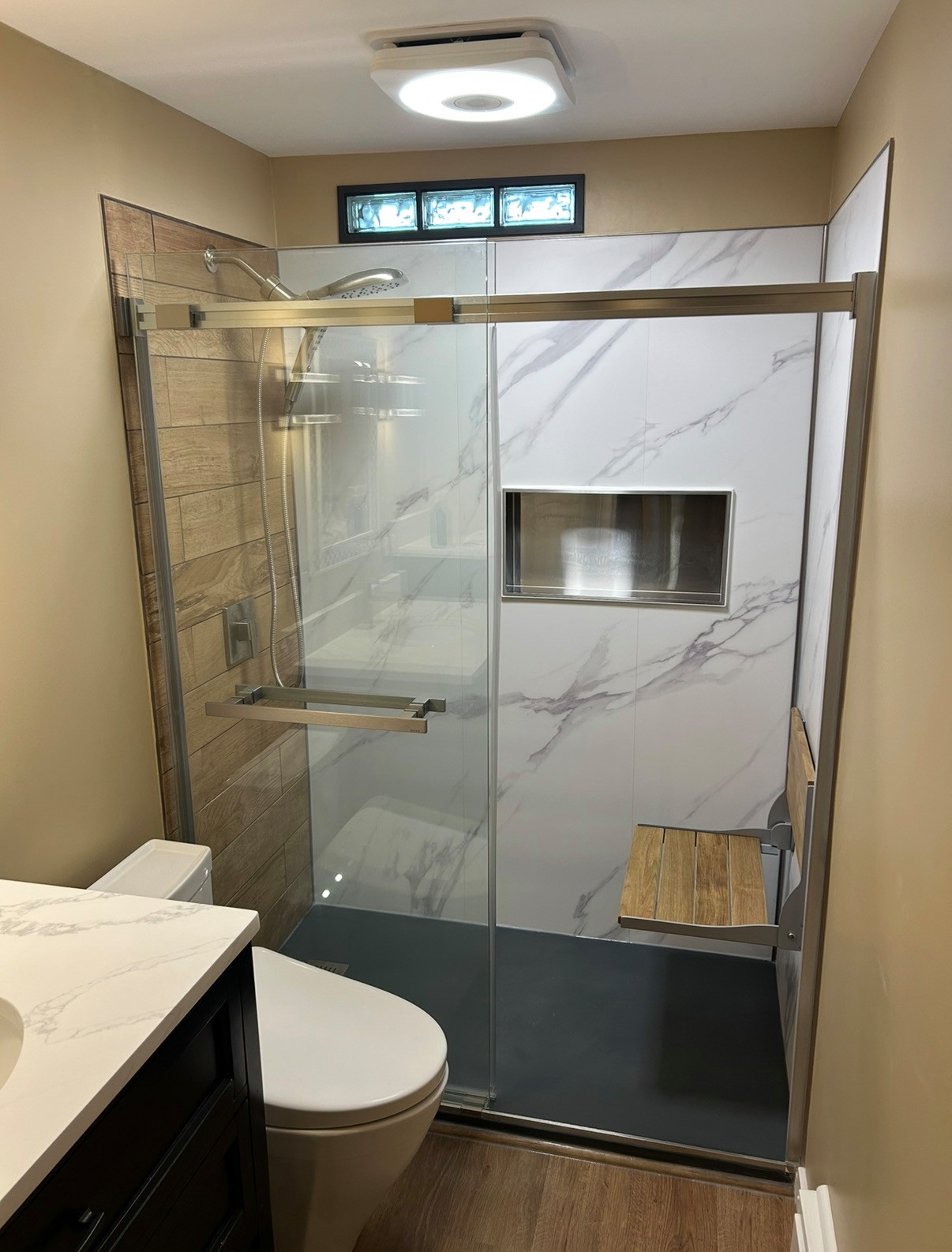
A professionally completed tub-to-shower conversion will commonly cost between $15,000 and $25,000.
The final price depends on several decisions, including:
- Decorative wall panels versus a custom tile shower
- Shower size and configuration
- Plumbing and mixing-valve requirements
- Glass shower-door style
- Showerhead and fixture selections
- Niches, shelves and shaving ledges
- Grab bars and accessibility features
- Seating and other shower accessories
- The condition of the framing and subfloor
A straightforward conversion using a quality decorative wall system will generally fall toward the lower end of the range. A full tile shower with custom glass, niches, upgraded fixtures and other features will move toward the higher end.
What Does a Complete Bathroom Remodel Cost?
A typical complete bathroom remodel completed by Stoic Renovations begins at approximately $25,000.
That price can change based on the bathroom’s square footage, the amount of wall and floor repair required, product selections, and whether plumbing or electrical components must be relocated.
A complete remodel may involve:
- Demolition and disposal
- Framing and subfloor repairs
- Plumbing and electrical work
- Shower or bathtub installation
- Waterproofing
- New flooring
- Vanity cabinetry and countertop
- Sink, faucet and plumbing connections
- Toilet installation
- Lighting, mirror and accessories
- Drywall repairs and painting
- Trim work
- Final cleanup and project closeout
A typical onsite project timeline is approximately 10–15 working days, although the exact schedule depends on the project’s size, complexity and any unforeseen conditions discovered after demolition.
What Does a High-End Bathroom Remodel Cost?
Larger and high-end custom bathrooms generally begin around $30,000, but $30,000 should be considered the lower end for a truly customized project.
Bathrooms have progressed far beyond the basic rooms people installed decades ago—when carpet in a bathroom was still common. Today, homeowners can choose from features such as:
- Heated tile floors
- Backlit and illuminated mirrors
- Custom wall niches
- Under-cabinet lighting
- Multiple showerheads
- Custom glass enclosures
- Built-in seating
- Premium cabinetry and countertops
- Specialized storage
- Accessibility and aging-in-place features
Every feature adds materials, planning, electrical or plumbing requirements, and installation time. The price of a custom bathroom is determined by more than the retail cost of its visible products.
Much of the Cost Is Behind the Finished Surface
Homeowners naturally focus on the items they can see: the vanity, countertop, faucet, flooring, shower walls and fixtures. However, a major portion of a bathroom-remodeling investment goes into work that becomes invisible when the project is finished.
Something that appears simple—such as moving a GFCI receptacle above the vanity—may require extending electrical wiring and bringing the installation into code compliance. Electrical wiring cannot simply be spliced anywhere and hidden inside a wall. It must be extended and enclosed correctly.
Plumbing also requires careful assessment. Old shutoff valves can stick or fail, and older chrome stub-outs may be corroded. We frequently recommend replacing outdated full-turn shutoffs with dependable quarter-turn valves while the plumbing is accessible.
Other behind-the-scenes work may include:
- Correcting damaged or inadequate framing
- Adding reinforcement for grab bars
- Framing wall niches and accessories
- Installing the correct wall substrate
- Repairing rotten subflooring
- Correcting plumbing connections
- Preparing walls and floors for waterproofing
- Ensuring fixtures are properly supported
This work may not appear in the finished photographs, but it determines whether the bathroom will function properly, remain safe and withstand years of daily use.
What Unforeseen Problems Can Affect the Price?
Bathrooms carry a higher risk of hidden damage because they regularly handle large amounts of water.
On actual remodeling projects, we have uncovered rotten subflooring near tubs and showers, inadequate framing in corners, corroded plumbing components and other conditions that could not be fully identified before demolition.
These problems must be corrected. Covering them to preserve the original price would jeopardize the homeowner’s investment and could create much more expensive problems later.
We recommend keeping a 10% contingency within the project budget. For a $25,000 bathroom remodel, that means having approximately $2,500 available for hidden conditions.
It is uncommon for an unforeseen issue to consume the entire contingency, but having that cushion allows the project to be completed correctly without forcing the homeowner to cut corners.
At Stoic Renovations, unforeseen work is documented through a change order and priced using a fair time-and-material method. The homeowner is not charged a penalty simply because neither party could see the condition beforehand.
How Does Changing the Layout Affect the Price?
Changing the bathroom’s layout is often the largest cost driver.
Moving a toilet, shower, vanity, wall or doorway involves much more than placing the fixture in a different position. Before making that change, we must determine whether the plumbing, drain, venting, electrical system and available space will support it while remaining code compliant.
Layout changes also require additional planning and design work. Moving a toilet can be especially complicated because of its larger drain and venting requirements.
Sometimes changing the layout is worthwhile. A bathroom should flow properly and support the way the homeowner uses it every day. However, homeowners should understand that layout changes introduce the greatest costs and risks and must be carefully assessed before construction begins.
Keeping the major fixtures in their existing locations is one of the best ways to control the budget.
Where Can You Safely Save Money?
If the budget requires compromises, save money on items that can be replaced easily in the future.
Good places to economize may include:
- Faucets
- Showerheads
- Mirrors
- Vanity lights
- Other surface-mounted fixtures and accessories
These items can usually be upgraded later without disturbing the major construction.
We do not recommend cutting costs on permanent or difficult-to-replace components, including:
- Cabinetry
- Countertops
- Flooring
- Shower walls
- Waterproofing
- Plumbing and electrical rough-ins
- Framing and structural reinforcement
A helpful rule is to invest in the parts that are built into the bathroom and save on the products that can be changed later without tearing the bathroom apart.
How Should You Compare Bathroom-Remodeling Estimates?
The lowest estimate is not necessarily the best value. Homeowners should compare the complete scope and process—not only the final number.
Ask the following questions:
- Is the proposal detailed and itemized, or is it only a lump sum?
- Does it clearly identify the products and work being provided?
- Are manufacturer warranties explained?
- Does the contractor provide a workmanship warranty?
- How are unforeseen conditions and change orders handled?
- Is there an organized product-selection process?
- How will the contractor communicate throughout the project?
- Who coordinates the different phases and trades?
- What are the cleanup and project-closeout procedures?
A company capable of providing an organized remodeling experience should begin demonstrating that organization before the homeowner signs the proposal.
The bathroom itself matters, but so does the experience of getting there—from the first consultation and product selections through construction, communication, cleanup and final closeout.
Is a Bathroom Remodel Worth the Investment?
In our opinion, the bathroom is one of the most valuable places to invest in a home because it affects everyday life.
A well-designed bathroom can provide:
- Greater daily comfort
- Better movement and functionality
- Improved safety
- Easier cleaning and maintenance
- Accessibility for changing mobility needs
- Protection against ongoing water damage
- Greater confidence in the home’s plumbing and electrical systems
Accessibility becomes especially important as homeowners age. A tub-to-shower conversion may eventually become a need rather than simply a preference. A properly designed shower with a lower entry, reinforced grab bars, appropriate seating and low-maintenance surfaces can help homeowners remain comfortable and independent in their homes.
Plan for a Project, Not a Quick Transaction
A bathroom remodel is not a quick click-and-buy transaction. It is a construction project with a complete lifecycle.
It requires planning, design, product selections, demolition, rough-in work, installation, communication, cleanup and final closeout. It will also temporarily disrupt part of the home.
There may be unforeseen conditions along the way. What matters is whether the homeowner and contractor planned responsibly and whether the contractor has a clear process for addressing those conditions.
The goal should not be to find someone who promises that nothing unexpected will happen. The goal should be to choose a contractor who communicates clearly, protects the home, solves problems correctly and keeps the entire process moving as smoothly as possible.
If you are planning a bathroom remodel in Lebanon or the surrounding Central Pennsylvania area, Stoic Renovations can help you understand the scope, establish a realistic budget and develop a bathroom that fits the way you live.